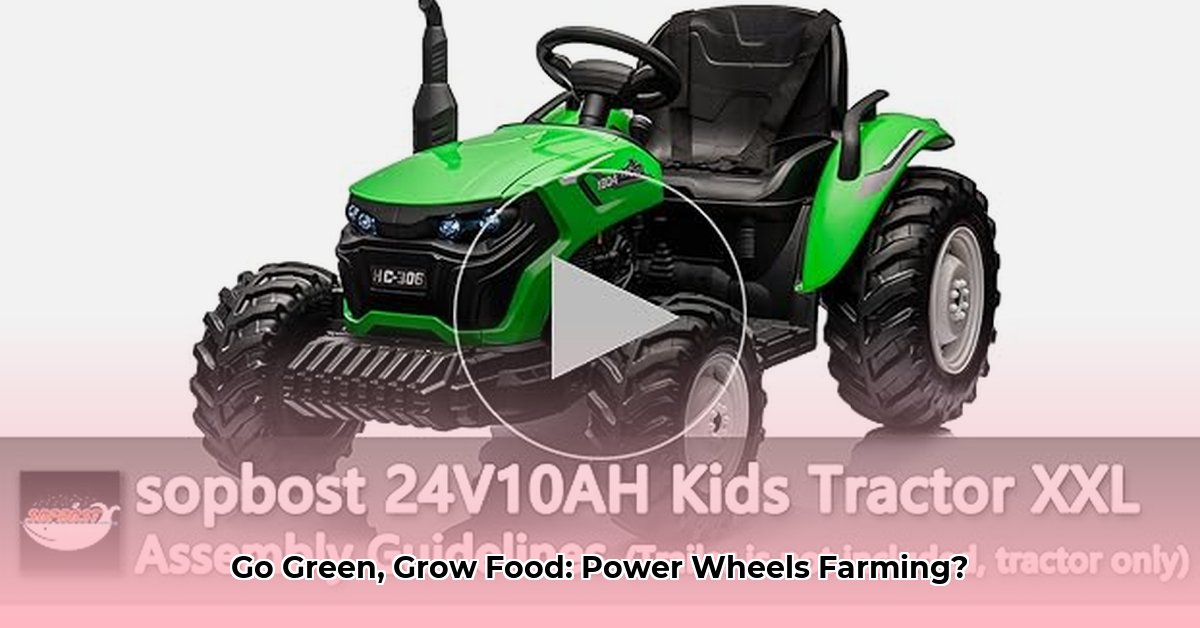
Let's be honest: a Power Wheels tractor won't plow a real field. But it can spark a child's interest in farming! And that's the perfect starting point for learning about environmentally friendly agricultural practices. This guide uses the familiar fun of a toy tractor to introduce crucial concepts of sustainable agriculture, relevant to both small-scale and large-scale farming operations. For more on toy tractors, check out this Power Wheels Tractor resource.
Understanding Sustainable Farming: Beyond the Toy Tractor
Sustainable farming isn't just a trend; it's responsible resource management ensuring food production for generations without environmental harm. Think of your Power Wheels tractor: it needs regular care (battery charging, cleaning, repairs) to function. Sustainable farming is similar; it requires careful planning to keep the "farm machine" running efficiently and effectively. It's a balance between production and environmental protection. Isn't it amazing how a child's toy can illustrate such a complex issue?
Water Conservation: Making Every Drop Count
Water is crucial but often wasted. Traditional farming methods can be incredibly water-intensive. Smart irrigation, however, allows for efficient water use. Think of precisely watering a plant's roots instead of widespread spraying. Key water conservation techniques include:
- Drip Irrigation: (Delivers water directly to plant roots, minimizing evaporation and runoff) This method is highly efficient, reducing water waste by up to 50% compared to traditional methods.
- Smart Sensors: (Soil moisture sensors measure water levels, indicating irrigation needs) These sensors prevent overwatering, saving both water and energy.
- Rainwater Harvesting: (Collecting rainwater for irrigation) This natural method provides a free and sustainable water source.
Rhetorical Question: Given the increasing scarcity of water resources, isn't investing in efficient irrigation systems a crucial step towards sustainable agriculture?
Organic Farming: Working with Nature
Organic farming uses natural methods instead of synthetic chemicals, working with nature. Healthy soil is the foundation for strong crops. Benefits include:
- Composting: (Turning food scraps and yard waste into nutrient-rich soil amendments) This improves soil fertility and reduces waste.
- Crop Rotation: (Planting different crops in succession to prevent soil depletion and reduce pest problems) This technique enhances soil health and reduces reliance on pesticides.
- Beneficial Insects: (Introducing insects that naturally control pests) This minimizes pesticide use and protects biodiversity.
Quantifiable Fact: Studies show that organic farming can increase biodiversity by up to 30% compared to conventional practices.
Soil Health: The Foundation of Sustainable Agriculture
Healthy soil is essential for productive farms. Think of a moist, airy sponge versus a dry, cracked one. Healthy soil better retains water and nutrients. Improving soil health involves:
- Cover Crops: (Planting crops to improve soil structure, prevent erosion, and suppress weeds) These crops act as natural soil conditioners.
- No-Till Farming: (Minimizing soil disturbance to maintain soil structure and enhance the natural microbiome) This method protects soil structure and enhances microbial activity.
- Erosion Control: (Techniques like contour plowing or terracing to prevent topsoil loss) Erosion control safeguards soil fertility and prevents water pollution.
Expert Quote: "Healthy soil is the cornerstone of sustainable agriculture. Investing in soil health is an investment in the future of food production," says Dr. Emily Carter, Agronomist, University of California, Davis.
Government Support and Incentives: Partnerships for Success
Governments often support sustainable agriculture through subsidies and grants, encouraging environmentally friendly practices. These initiatives incentivize farmers to adopt sustainable methods, contributing to a healthier environment.
Actionable Steps: From Power Wheels to Real-World Impact
Even small steps make a difference. Here's how different stakeholders can contribute:
- Individual Actions: Learn about sustainable farming; start a home garden; reduce food waste and compost.
- Family Actions: Visit a local farm; adopt sustainable household practices.
- Community Actions: Support local farmers' markets; advocate for policies supporting sustainable food systems.
Remember, even seemingly small actions collectively contribute significantly. Introducing children to sustainable farming – connecting their Power Wheels tractor to the reality of farming – fosters a lifetime of responsible stewardship. It's a journey, not a race!